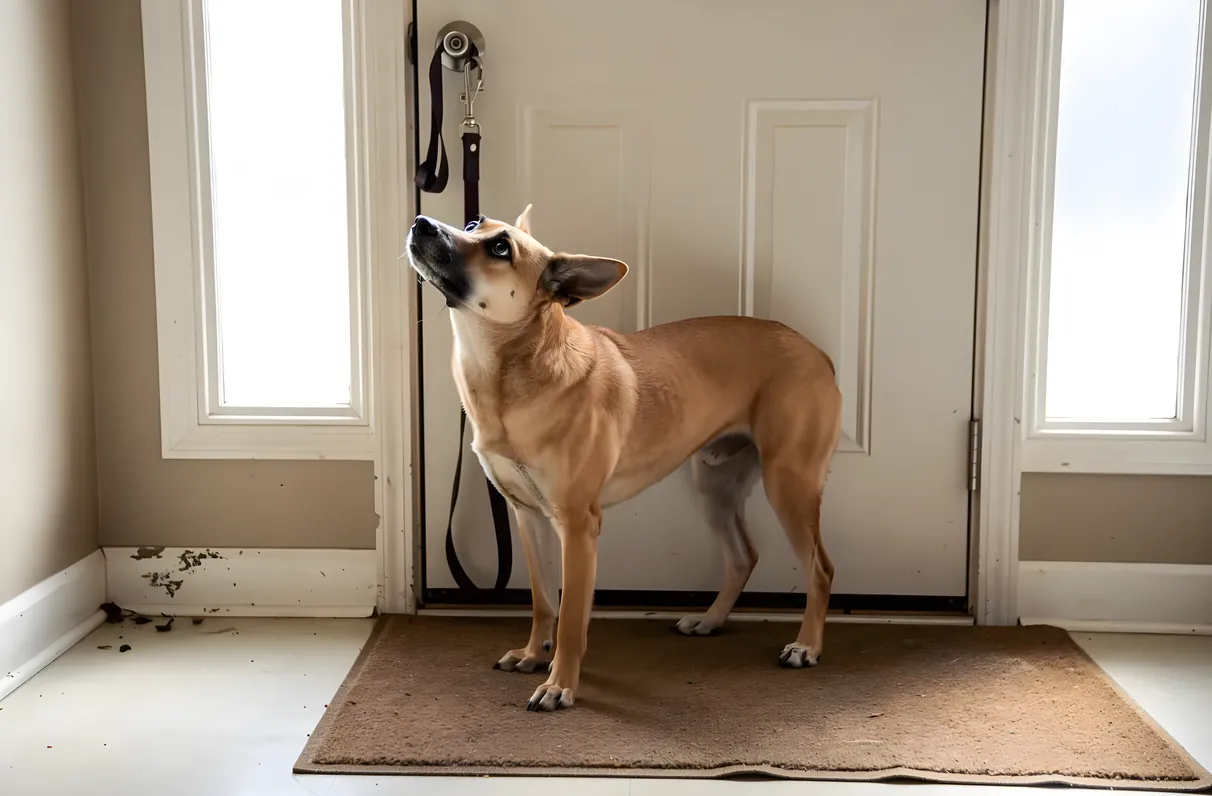
When Your Dog Needs More Than a Walk: Signs to Watch For in Celina, TX
Maybe the baseboards have new teeth marks in them. Maybe your dog won't settle onto the couch an hour after a walk. Maybe the scale at the vet's office read a little higher than last year, or she's started barking at things that never bothered her before. None of these means much on its own, but together they often point to the same cause: destructive behavior, weight gain, and anxiety are three of the clearest signs a dog's exercise needs aren't being met by a daily walk. This isn't a diagnosis. It usually just means the walk that used to be enough for her isn't doing the job anymore. The rest of this page covers each sign, how much exercise actually makes sense, and what to do next if it sounds familiar.
Destructive Behavior and Restlessness: Where the Extra Energy Goes
Chewed shoes, dug-up flower beds, a couch cushion with a hole that wasn't there last month: destructive behavior is usually the loudest sign that a dog's energy has nowhere else to go. So is restlessness that doesn't settle even hours after a walk, or pacing that starts up the moment you sit down for the evening. Physical and mental energy that doesn't get used on a walk doesn't just disappear. It has to go somewhere, and for a lot of dogs, that somewhere is a piece of furniture, a shoe by the door, or a patch of yard that used to be off-limits. This shows up especially in young dogs and naturally high-energy breeds, whose exercise needs outpace a single walk. If your dog has started getting into things that never interested her before, it's worth asking whether the walk has kept up with her.
Weight Gain and Other Physical Signs Worth Noticing
Weight gain doesn't get talked about as an exercise sign nearly as often as chewing or pacing does, but it works the same way it does for people: less movement generally means more stored energy, and that shows up as weight over time. You might also notice your dog tiring less easily on a route that used to wear her out, or a little less muscle tone along her back and legs. It's usually just a sense that the dog in front of you isn't quite the same shape or stamina as she was a year ago. One caveat matters here: a sudden or significant weight change can also point to a health issue unrelated to exercise, and that's a reason to talk to a vet, not just add a longer walk. A gradual, steady creep alongside a normal appetite is the pattern worth connecting to exercise; anything sudden deserves a second opinion first.
Anxiety and Excess Barking: The Behavioral Side of Under-Exercise
Where destructive behavior is what a dog does with unused energy, anxiety and excess barking are more about how she seems. A dog that's grown more anxious, vocal, or on edge than she used to be, especially around routine moments like someone leaving the house or a doorbell, is often carrying the same pent-up energy that shows up as chewing in other dogs. It just comes out differently. Energy that doesn't get spent on a walk has to surface somehow, and for some dogs that means barking at nothing in particular rather than gnawing on a table leg. If your dog has gotten more reactive to everyday sounds than she used to be, that belongs in the same category as the signs above.
How Much Exercise Is Actually Enough for Your Dog
There's no single number that works for every dog. Energy level, age, breed, and overall health all change what "enough" actually looks like, which is why a generic answer rarely holds up. A young, high-energy dog and an older, lower-energy dog can both technically be getting a daily walk and still have very different needs underneath it. Rather than chasing a specific minutes-per-day figure, the signs covered above are the most reliable answer available: your dog's own behavior tells you more than a chart ever could.
What Helps When One Walk a Day Isn't Cutting It
The fix usually doesn't require anything dramatic. A longer version of the walk you're already doing, a second short walk added to the day, or simply more time to sniff around on a new route can close a real exercise gap without overhauling your dog's schedule. Young and high-energy dogs tend to show these signs most often, and they're also the group where more frequent, purpose-built walking makes the biggest difference. If that's the situation you're looking at, a puppy walk built around a young dog's energy level is designed for this kind of gap: shorter, more frequent outings matched to a young dog's actual stamina rather than one walk stretched too far.
Questions About Exercise Needs, Answered
What's the most common sign a dog isn't getting enough exercise?
Destructive behavior and restlessness that doesn't settle after a walk tend to be the two most visible signs, since unused energy usually shows up as behavior first. These changes often build gradually over weeks, which is why the pattern is easy to miss.
Could my dog's weight gain be about exercise instead of food?
Yes, reduced activity is a real contributor to gradual weight gain, the same as it is in people. It's still worth ruling out a health cause with a vet if the change came on suddenly or seems significant.
Does more exercise actually help with anxious or vocal behavior?
For a lot of dogs, yes. Unused energy can come out as anxiety or excess barking the same way it comes out as chewing. That said, it isn't a substitute for addressing a genuine issue if the anxiety is severe or sudden.
What's the easiest first step if I think my dog needs more exercise?
A longer walk or a second walk added to the day is usually the simplest place to start. For young or high-energy dogs specifically, more frequent, purpose-built walking makes the biggest difference of any single change you could make.
Getting Your Dog the Exercise They're Actually Asking For
If what you're reading here sounds like your dog, the fix is often smaller than it seems: more of what she's already getting, just a bit more often or with more room to roam. But if the real issue isn't exercise at all, if she's alone for long stretches during the workday or a trip is coming up, daycare vs. dog walking and boarding vs. in-home care cover those comparisons instead.