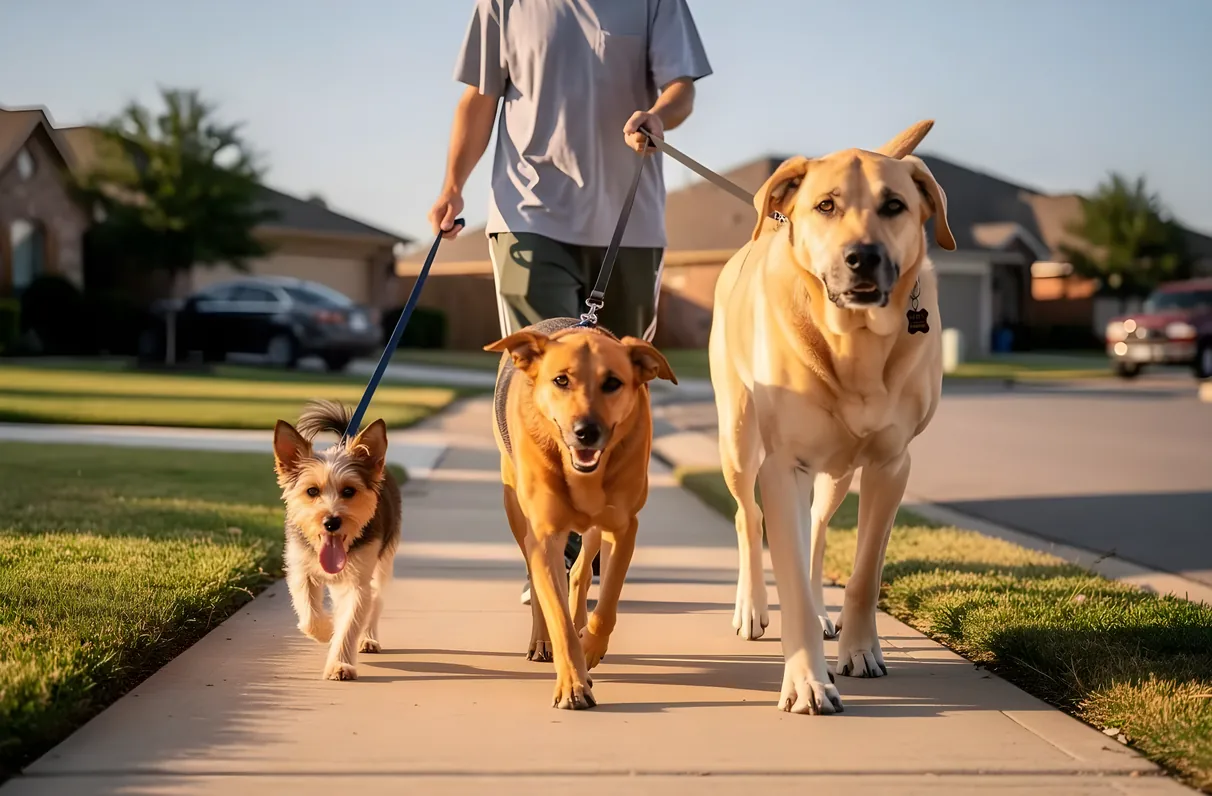
Group Dog Walks vs. Solo Dog Walks: Which Fits Your Dog in Celina, TX?
A group dog walk pairs your dog with a few others on the same route, while a solo dog walk gives your dog one-on-one, individual attention from a single walker. In Celina, most providers list this as one line item, but walk format is a real decision, not just a price tier. It usually comes down to one thing: how your dog behaves around other dogs. A social, easygoing dog that enjoys company tends to do well in a group walk, while a reactive, anxious, or still-learning-leash-manners dog usually needs the individual attention a solo walk provides. This page covers what each format looks like and which one fits your dog. If dog walking isn't even the service you need, the full list of dog walking and pet sitting services in Celina is a good place to start.
What a Group Dog Walk Looks Like
A group dog walk means your dog joins a small number of other dogs, typically just a handful, for a walk led by one experienced walker. Everyone follows the same route at the same pace, and the walker manages the group as a unit rather than splitting attention one-on-one.
The main draw is socialization. A dog that enjoys other dogs' company gets real exercise plus regular, supervised peer interaction that a solo walk can't offer on its own. For a dog that lights up around other pups, that's often the more enriching option of the two.
Because the walker's time is split across several dogs in the same session, group walks are typically priced lower than solo walks. That's less about cutting corners and more about shared time costing less per dog.
What a Solo Dog Walk Looks Like
A solo dog walk flips that setup: one dog, one walker, for the entire session, with no other dogs in the mix. Every minute belongs to your dog alone.
That undivided attention is the whole point. A solo walker can adjust the pace on the spot, stop for extra sniffing time, choose a quieter stretch if your dog seems on edge, or work in a few minutes of leash-manners practice, none of which is realistic when a walker is managing two or three other dogs at once.
Solo walks typically cost more than group walks, since the walker serves one client per time slot instead of splitting a session across several dogs. You're paying for a walker's full focus, not just their time.
Which Format Fits Your Dog
The honest answer depends on your dog's temperament, not a fixed rule for every household. A socially confident dog who gets visibly excited around other dogs, doesn't mind sharing a walker's attention, and reads other dogs well is usually a strong match for group walks. That dog isn't just tolerating the format, it's actively benefiting from the company.
A different picture calls for a solo walk. A dog that lunges, barks, or tenses up around other dogs on leash needs a walker who can watch the environment closely without also managing a second or third animal. The same goes for a dog that's easily overstimulated or anxious in busy settings, an older dog whose joints need a slower pace than a group can offer, or a young puppy still learning leash manners.
None of this is absolute. Plenty of dogs do fine in either format, and the simplest test is watching how your dog behaves the next time it's near other dogs on a leash.
Daily Dog Walks: Building a Routine That Sticks
Most Celina households hiring a dog walker want daily dog walks, or something close to it, timed around a workday. Both formats can support that kind of routine, but they flex differently.
Group walks tend to run on a more fixed daily time slot, since the walker is coordinating pickup and drop-off for several dogs on the same route. Solo walks flex more easily around a single dog's needs or a household's changing schedule, since there's no group timing to work around. If your work hours shift from week to week, that flexibility can matter as much as the format itself.
Group and Solo Walk Questions, Answered
What's the difference between a group dog walk and a solo dog walk? A group walk takes a handful of dogs out together on the same route with one walker. A solo walk is one dog and one walker for the entire session. See the sections above for the full breakdown.
Is a group dog walk safe for a dog that doesn't like other dogs? Not usually. A reactive, anxious, or easily overstimulated dog tends to do better with a solo walk, where the walker can control pace and avoid triggers without juggling multiple dogs.
Can I switch between group and solo walks? Many providers offer both formats, so switching is often just a matter of asking. A dog new to a walker might start solo, then move to group walks once the walker knows its temperament, or the other way around.
Finding the Right Walk Format in Celina
Once you've settled on group or solo, the practical details, scheduling, what a visit covers, and how to get matched with a walker, live on the dog walking service page. Whichever format you choose, look for a walker who's insured, bonded, and background-checked either way.
Format is just one piece of the picture. If dog walking isn't quite what your household needs, the broader range of local pet care options is worth a second look before you book anything.