Puppy Walks in Celina, TX: Dog Walking for Young Dogs
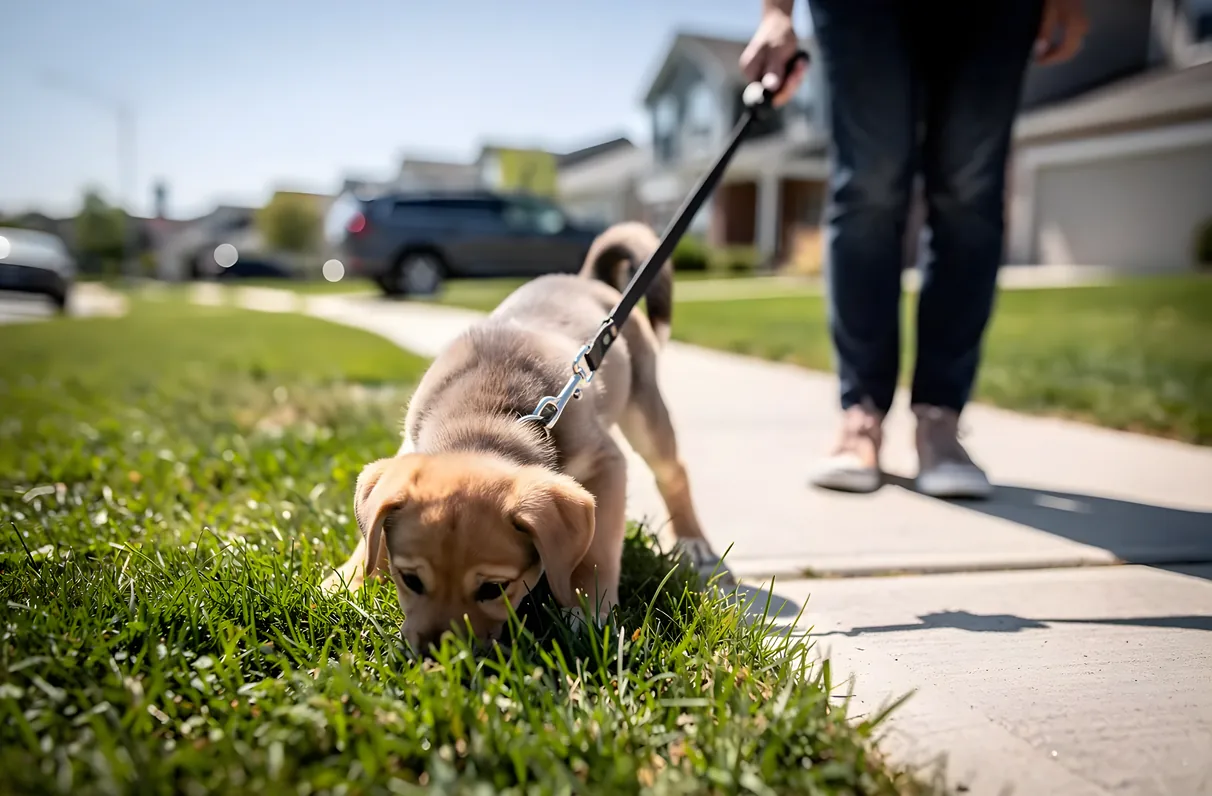
A dog walker for puppies in Celina works at a slower pace than a walk built for a grown dog: shorter routes, more frequent stops, and a lot more patience. That comes down to a young dog's needs, from developing joints to a shorter attention span. Puppy walks do double duty, since a consistent walking and bathroom schedule is one of the fastest ways to reinforce house training, tied to feeding and waking rather than fit in whenever the day allows. Early walks also introduce a puppy to ordinary neighborhood sights and sounds in small, calm doses, shaping how comfortable that dog feels outdoors later on. For a Celina pet owner comparing providers, this page lays out what puppy-appropriate care looks like before you book anyone for a young dog.
What Makes a Puppy Walk Different From a Regular Dog Walk
A regular dog walk for a grown, leash-trained dog can cover real distance in one outing. A puppy walk works differently: shorter routes and more frequent short outings suit a young dog's smaller stride and shorter attention span better than one long walk ever could. Because many puppies are still learning basic leash manners, a dog walker for puppy visits keeps the leash short and watches closely for pulling and distractions.
The walk becomes a training session, not just exercise, as a puppy learns to walk politely, respond to its name, and settle when something exciting passes by. Once a dog is grown and comfortable on a leash, a standard dog walking visit is usually the better fit, built around a longer route rather than active leash coaching.
Building a Walking and Potty Schedule Your Puppy Can Count On
Puppies learn bathroom habits through repetition, and a predictable walk schedule is one of the clearest ways to build it. Timing walks around feeding and waking, rather than fitting them in whenever the day allows, gives a puppy a consistent chance to go outside right when its body needs to. An irregular schedule sends mixed signals; a consistent one does not.
Consistency matters more than distance at this stage. A short walk at the same time every day teaches a puppy's routine faster than one long walk at a different hour each day. For a Celina owner heading back into the office after working from home, a scheduled midday visit fills the gap a young puppy cannot handle alone yet: hours between morning and evening with no chance to get outside.
Socialization and Safety on Early Walks
Socialization on a puppy walk means calm, controlled exposure, not a parade of new dogs to meet. A puppy that gets used to passing cars, other leashed dogs at a distance, kids on bikes, and normal foot traffic in small, low-pressure doses tends to grow into a calmer, more confident adult dog. Rushing that exposure, or flooding a puppy with too much at once, tends to backfire.
A puppy walker who understands this reads the dog's body language, watching tail carriage and ear position, and adjusts the route or pace rather than pushing through.
Celina's summer heat adds a practical safety layer: a puppy's paw pads are more sensitive to hot pavement than an adult dog's, one more reason local walks often shift toward early morning or evening once summer sets in.
What to Look for in a Puppy Walker
The baseline does not change just because the dog is young: any Celina walker handling your puppy should be insured and bonded, background-checked, and Pet CPR certified where applicable. Those standards protect you and your dog no matter the dog's age.
What changes is what gets layered on top: patience with a dog still learning basic commands and leash manners, the ability to read fatigue and stress signals in an animal too young to communicate them clearly, and the judgment to keep a session calm rather than treating it like a high-energy outing a young puppy isn't ready for.
Puppy Walk Questions Celina Pet Owners Ask
What age can a puppy start going on walks? Most puppies can start short, low-risk outings, like time in a fenced yard or a carried trip around the block, well before their vaccination series is finished. Walking in areas other dogs frequent is usually better held off until a vet clears the puppy, since every vaccination schedule is different. This is a conversation for your vet, not a fixed date on a calendar.
How long should a puppy walk be? Puppy walks run shorter than an adult dog's walk, with several brief outings favored over one long one. Watching for early signs of tiredness, like lagging behind, sitting down mid-walk, or heavy panting, matters more than hitting a specific time or distance target.
Can a dog walker help with house training a puppy? Yes, especially when the walker sticks to the schedule described above and lets you know how each outing went. A quick note on whether your puppy went, on top of consistent timing, gives you a clearer read on your puppy's patterns than tracking it yourself around a full workday.
Is it safe to walk a puppy outside during Celina's summer heat? Yes, with some care around timing. A puppy's paw pads take heat off pavement faster than an adult dog's do, so a simple test helps: press the back of your hand to the pavement for five seconds, and if it feels hot, it is too hot for your puppy's paws.
Finding the Right Walk for Your Puppy
We built this page because puppies get lumped into "dog walking" more often than not, even though the walk your eight-week-old needs looks nothing like the walk your neighbor's five-year-old gets. If your dog has grown past the puppy stage, is already leash-trained, or needs overnight care instead, browse the full range of services to find the option that matches where your dog is right now.