Dog Walking Safety Tips for Celina, TX's Texas Heat
A hot Celina sidewalk can burn a dog's paws, since asphalt and concrete hold far more heat than the air above them. That's the single most Texas-specific hazard on any local walk, and the fastest way to check it is the 5 second rule: press the back of your hand to the pavement, and if you can't hold it there for five seconds, it's too hot for your dog too.
This guide covers that test in detail, along with three other situations that change how a walk should go: keeping a leash under control, handling an unexpected encounter with another dog, and staying visible once a walk happens after dark. None of this is tied to any one provider. It's the kind of practical, walk-specific guidance every Celina dog owner can use, whether you're walking your own dog or hiring someone to do it. If you're weighing that second option, what a professional dog walking visit in Celina includes covers schedule, format, and cost.
Beating the Texas Heat on a Celina Dog Walk
The 5 second rule is the most reliable heat check available, and it's worth doing exactly right. Press the back of your hand, not your palm, flat against the pavement and hold it there for a full five seconds. If it's too hot for your hand to stay comfortable that long, it's too hot for your dog's paws, full stop.
Run that check on the actual surface your dog will cross, meaning direct asphalt or concrete rather than a driveway shaded by trees. Grass and shaded paths stay noticeably cooler than open pavement, so a route that favors grass over exposed sidewalk is worth the extra few minutes it might take.
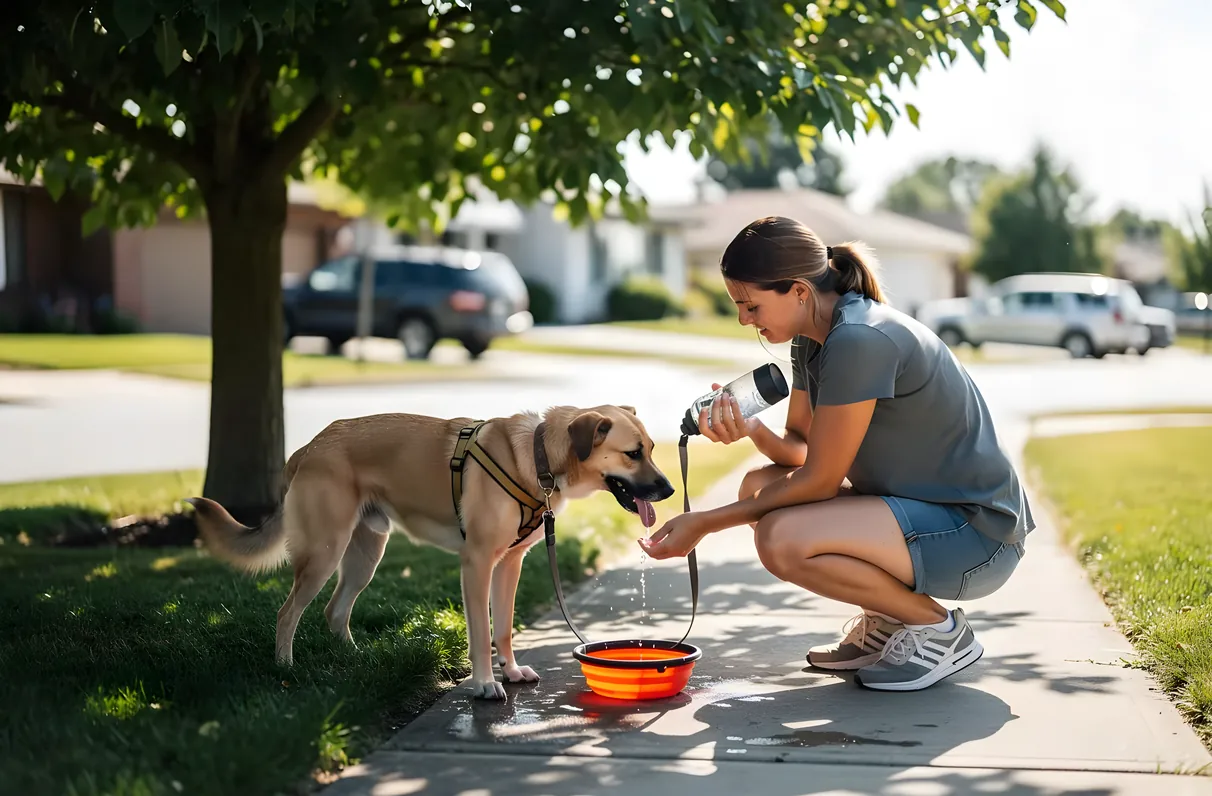
The simplest long-term fix, once North Texas summer sets in, is timing. Shifting a walk to early morning or evening avoids the hottest stretch of the day entirely, rather than trying to push through it and check pavement temperature the whole way. On longer summer walks, bring water along and lean toward a shaded route whenever one is available. A dog that gets a shade break and a drink halfway through handles the heat noticeably better than one that doesn't.
Leash Handling That Keeps a Walk Under Control
A shorter, non-retractable leash gives you faster, more predictable control than a long retractable line does, especially near traffic, another dog, or a sudden distraction. Keep enough slack for your dog to walk at a natural pace, but not so much that they can build speed before you have a chance to react.
A front-clip harness or a well-fitted collar reduces pulling strain without choking, which helps if your dog is still learning to walk on a loose leash. The goal isn't a rigid heel, just enough control that you can respond quickly when something unexpected happens.
What To Do When Your Dog Meets Another Dog
Watch body language before letting any greeting happen. A stiff body, raised hackles, or a fixed stare are signs to create distance, not push the dogs together and hope it works out.
Once a greeting is actually underway, keep the leash loose rather than pulling it tight. A tight leash restricts a dog's natural movement and can make them feel more defensive, which sometimes turns a fine interaction into a tense one. If a loose or unfamiliar dog approaches unexpectedly, the safest first move is usually calm and simple: cross to the other side of the street, or turn around and head back the way you came.
Walking Safely After Dark in Celina, TX
A reflective leash or collar, or a small clip-on light, makes a real difference once summer evening walks shift later or winter mornings start before sunrise. Drivers simply see you sooner, which matters more than it might seem.
Pair that gear with a familiar, well-lit route, and walk facing oncoming traffic on any stretch without a sidewalk. Both habits take no extra effort once they're routine, and both meaningfully lower your risk on a dark walk.
Dog Walking Safety Questions for Celina, TX Owners
How hot is too hot to walk a dog in Celina, TX? There's no single safe temperature number, since pavement runs far hotter than the air. Treat the 5 second rule as the real test: if the sidewalk fails it, that's the hard stop no matter what the thermometer says.
Can my dog walk on grass instead of pavement during a heat wave? Grass and shaded paths stay noticeably cooler than asphalt or concrete, so routing a summer walk over grass where possible is a reasonable adjustment. It's not a guarantee on the hottest days, so still check exposed pavement crossings with the 5 second rule.
What are the signs my dog is overheating on a walk? Heavy panting that doesn't ease up, excess drooling, a sudden sluggish pace, or a dog that wants to lie down mid-walk are signs to stop immediately, move to shade, and offer water. Head home rather than finish the planned route.
What should I do if my dog won't stop pulling toward another dog on a leash? Create distance first, calmly and without yanking the leash, then redirect your dog's attention with your voice or a turn in a different direction. Forcing a close greeting when a dog is fixated rarely calms things down.
Do I need special gear for a nighttime dog walk? A reflective leash or collar and a small clip-on light are inexpensive and make a real difference in how visible you and your dog are to drivers, especially paired with a familiar, well-lit route.
A Safer Walk Starts Before You Leave the House
Four habits cover most of what changes a walk's outcome: check the pavement before a summer walk, keep enough leash control to react fast, give space around an unfamiliar dog, and gear up before heading out after dark. None of it takes long once it's routine. If you're still deciding how often to walk your dog, that guide pairs well with this one.
For the other Celina, TX guides on this site, including how walking frequency works and what to know before choosing between a local dog walker and an app, see the full set of Celina, TX dog walking and pet sitting guides in resources.