How Often Should You Walk Your Dog? A Celina, TX Owner's Guide
There's no single number of walks that fits every dog, and any guide that hands you one flat answer is skipping the part that matters. How often you should walk your dog in Celina depends less on a fixed rule and more on four things working together: your dog's age, its breed and energy level, the North Texas weather on any given day, and your own daily schedule. Most healthy adult dogs do well with one to two walks a day, roughly 30 to 60 minutes total, and that's a starting point, not a fixed rule. A puppy needs a different rhythm than a senior dog. A high-energy herding breed needs a different rhythm than a laid-back companion breed. A Celina summer afternoon changes the timing question just as much as the dog itself does. This guide walks through those four factors so a new dog owner, or anyone rethinking an old schedule, can build a routine that fits the dog in front of them.
Why There's No Single Number That Fits Every Dog
A commonly cited starting point for a healthy adult dog is one to two walks a day, roughly 30 to 60 minutes. Most vets and trainers treat that as a reasonable baseline, not a formula that applies the same way to every dog in Celina. A dog's actual walking needs shift based on four things: age, breed and energy level, how hot or mild the weather happens to be, and how your own daily routine is built. Treat the sections below as a framework for adjusting that baseline to the dog you actually have.
How Age Changes How Often Your Dog Needs to Walk
Puppies need several short walks spread across the day rather than one long outing, since a young dog's bladder cycle and attention span are both shorter than an adult dog's. The full mechanics of puppy walking and leash training are their own topic, but the short version holds true regardless of energy level: more frequent, shorter walks beat one long session.
Adult dogs are usually where the one-to-two-walks-a-day baseline applies most directly, assuming the dog is otherwise healthy and not carrying an unusually high or low energy level for its breed.
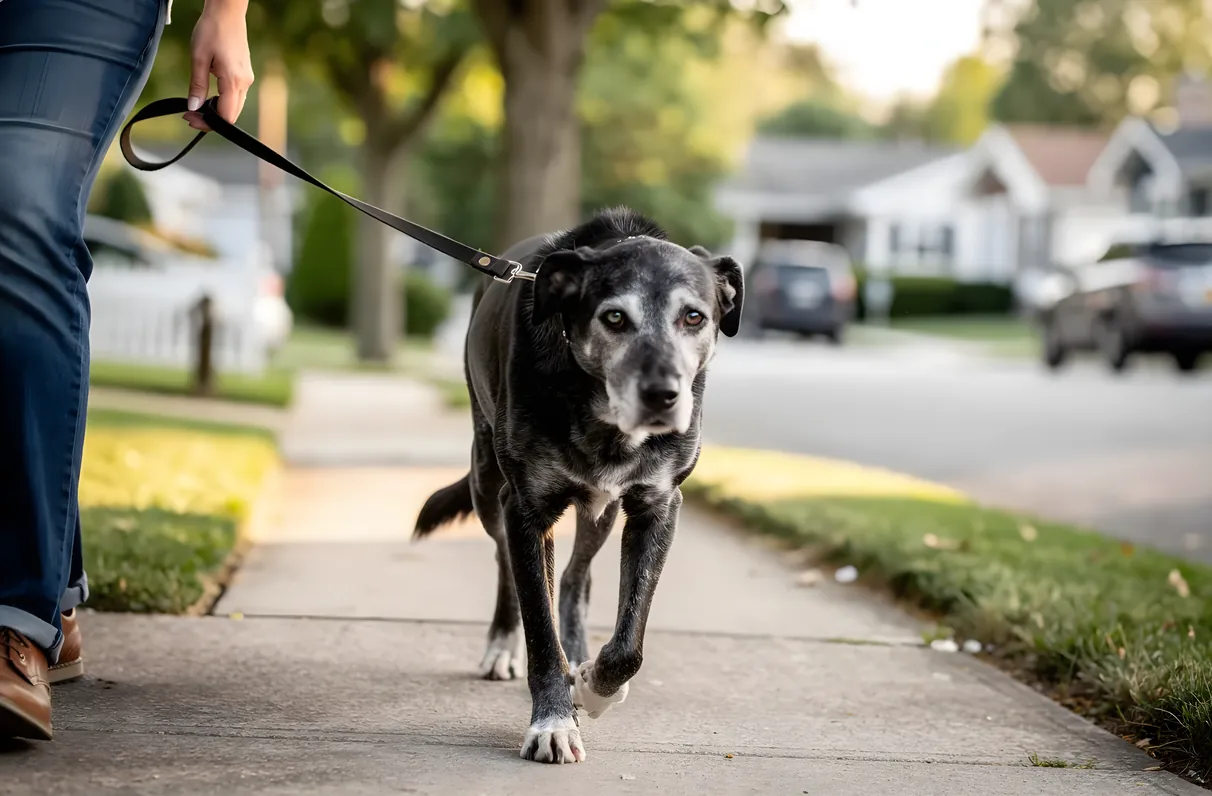
Senior dogs and dogs with lower mobility often do better on two shorter walks instead of one long one. Splitting the same daily activity into smaller sessions is generally easier on aging joints, even when the total time stays about the same. In practice, this often looks like two dogs in the same Celina household: a young, energetic dog might need three shorter walks a day, while an older dog in the house often does just as well with two.
How Breed and Energy Level Change the Schedule
High-energy working, herding, and sporting breeds typically need more exercise and mental stimulation than a single short walk provides, regardless of age. A young herding dog or working-line retriever burns through a quick fifteen-minute stroll, and without enough activity, that energy often shows up elsewhere: chewing, barking, or restlessness at home.
Lower-energy breeds, along with some flat-faced (brachycephalic) breeds, generally do better on shorter, cooler, less strenuous walks. That matters even more once Celina's summer heat sets in, since these dogs typically have a harder time regulating body temperature during exercise.
As a general pattern, energy level varies as much within a breed as it does between breeds. Two dogs of the same breed can have noticeably different exercise needs based on temperament, so treat breed as a starting signal, not a rigid formula.
How Celina's Weather Shapes When and How Often You Walk
Once North Texas summer heat sets in, splitting one longer midday walk into two shorter walks, one in the early morning and one in the evening, often fits better than skipping exercise altogether or pushing through a single walk in peak heat. The dog still gets roughly the same total activity, spread across the cooler parts of the day.
Pavement and peak-heat timing carry real safety considerations of their own. The full breakdown on beating the heat, including the five-second pavement check, lives in our dog walking safety tips guide. This section covers timing and frequency, not the safety mechanics themselves.
Cooler months can flip that math. A mild fall or winter day sometimes supports one longer walk instead of two shorter ones, depending on your dog's age and energy level.
Building a Walking Routine That Actually Fits Your Life
A dog's ideal schedule also has to work for the household running it. For a Celina household that's out of the house most of the day, a scheduled midday visit from a professional dog walking service often covers the gap between a morning and evening walk, keeping the routine consistent even when your own hours can't.
Yard access changes the math somewhat. A dog with yard access may need fewer walks purely for bathroom breaks, but still benefits from scheduled walks for exercise and mental stimulation, not just relief.
A consistent daily rhythm, similar times each day, tends to work better for a dog than an irregular one, even if the exact walk times shift a little from day to day.
Questions Celina, TX Pet Owners Ask About Walking Frequency
How many times a day should you walk your dog? Most healthy adult dogs do well with one to two walks a day, but that's a starting point, not a rule. A high-energy dog may need more activity than two walks provide, while an older or lower-energy dog may be perfectly content with less. See the age and breed sections above for how those factors shift the number for your dog.
Is one long walk better than two or three shorter ones? Neither is automatically better. Two or three shorter walks tend to suit puppies, seniors, and hot Celina afternoons, while one longer walk can work well for an active adult dog on a mild day. The right split depends more on your dog's age and energy level than a fixed formula.
Do puppies need more frequent walks than adult dogs? Yes. Puppies need shorter, more frequent walks tied to a shorter bladder cycle and attention span rather than one long walk. That need eases gradually as a puppy grows into an adult schedule, usually between six months and a year depending on the dog.
How does Texas summer heat change how often you should walk your dog? Rather than skipping a walk altogether, many Celina owners split one midday walk into two shorter ones in the early morning and evening once summer heat sets in. For the safety specifics of walking in the heat, see our dog walking safety tips guide.
Finding the Right Schedule for Your Dog
Even a schedule built around age, breed, weather, and your own routine sometimes isn't enough on its own. If your dog still seems restless, anxious, or under-exercised once you've adjusted the number and timing of walks, that's usually a sign something beyond frequency is going on. We put together signs your dog needs more than a walk for exactly that situation. And if walking frequency wasn't quite the question you came here with, our Celina, TX pet owner guides cover the other questions that come up most, from choosing between a local walker and an app to handling Texas heat safely.